


Roof Leaking in a Storm? What to Do First in Sunnyvale
Water is coming in and the storm is still going. This guide covers the first hour: safety first, then containment, then the call.
Water is coming through the ceiling. The storm is still going. This is the worst time to make decisions, so here is the short version first.
If anyone is in danger, call 911 first. That means a fire, an injury, a downed power line, or a ceiling or roof that looks ready to collapse. Everything else comes second.
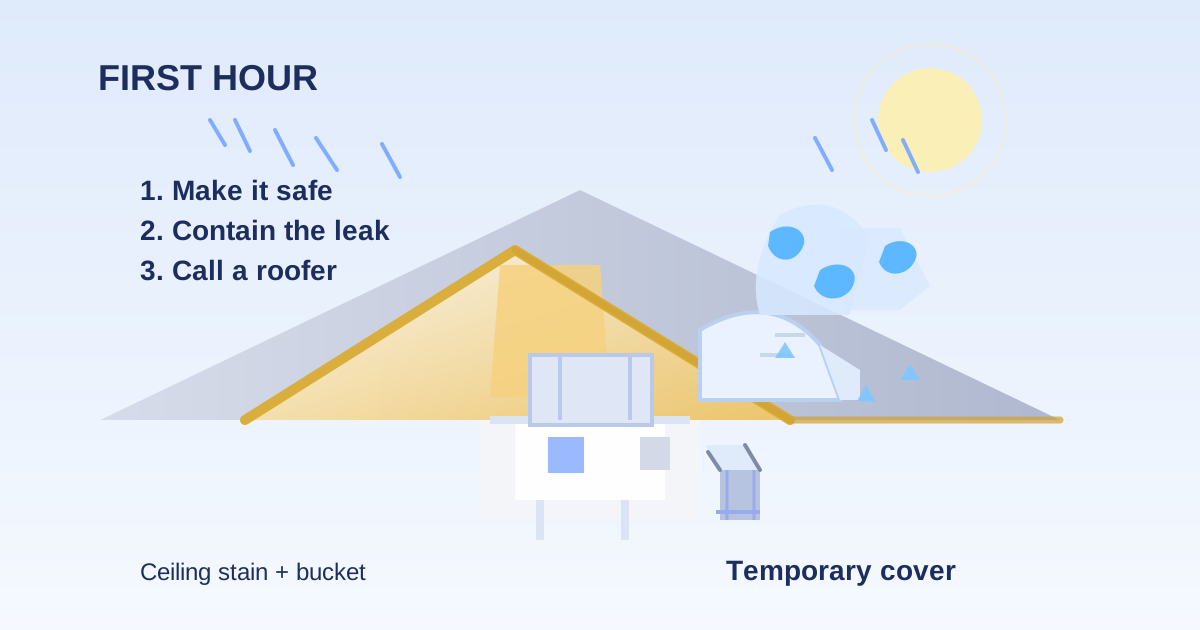
If water is coming in and no one is in danger, do three things in this order. Make the room safe. Contain the water. Call a roofer. This post walks through each step, and through what happens after the cover goes on.
One warning before the detail. This post is general information, not a substitute for a professional inspection. A roof that looks fine from the ground can still be damaged. A leak that stops when the rain stops can still come back with the next storm.
The 60 second check: emergency, or can it wait
Not every roof problem is an emergency. The difference is simple. An emergency is water getting in now, or damage that will let water in with the next rain. A problem that can wait is damage with no water coming in and no rain on the way.
Call now, day or night, if any of these are true.
- Water is dripping or pouring into the house.
- A ceiling is bulging or sagging with trapped water.
- A tree or a large branch is on the roof.
- Roofing is torn or missing and rain is coming.
- Water is near lights, outlets, or the electrical panel.
- You smell burning, or you see sparks or a downed line. Call 911 for this one first.
You can usually schedule a normal visit if all of these are true.
- The stain on the ceiling is old and has not changed.
- No water is coming in, and no rain is forecast.
- The damage is one slipped tile or a few lifted shingles with no leak.
- There is debris on the roof but no visible opening.
If you are unsure, treat it as urgent and call. A short call costs nothing. A night of water coming in costs a lot.
The first hour, minute by minute
Minutes 0 to 10: make people safe
Get everyone out from under a sagging ceiling. A ceiling full of water can come down without warning. Keep children and pets away from wet floors.
Check the electrics before you touch anything wet. If water is near a light fixture, an outlet, or the electrical panel, turn off power to that area. Do this only if you can reach the breaker safely and the floor around it is dry. If you cannot, stay away. Call an electrician or your utility.
Do not go on the roof. Wet roofing is slippery. A storm-damaged roof can have weak spots you cannot see. Most falls happen when someone climbs up during or right after a storm. Everything in the first hour happens inside the house and on the ground.
Minutes 10 to 30: contain the water
Put buckets, bins, or pots under the drip. Lay towels and plastic sheeting under them. Move furniture, electronics, and anything valuable out of the way. Lift what you cannot move.
If a ceiling is bulging with trapped water and there are no electrical fixtures nearby, a small controlled hole at the lowest point can drain it in a controlled way. This can stop a whole sheet of drywall from collapsing. Do not do this if the ceiling is badly sagging, if it is plaster, or if wiring is nearby. In those cases, stay out of the room and call.
Minutes 30 to 60: document, then call
Take photos and a short video before you clean up. Photograph the drip, the ceiling stain, and any damage you can see from the ground. Photograph the room before you move things back. Insurers ask for this. A roofer uses it to plan the visit.
Then call. Say right away that water is coming in. Have these details ready if you can.
- Where the water is coming in, and which part of the house it is on.
- What you think caused it: a storm, a fallen branch, missing roofing, or a sudden leak.
- Your roof type, if you know it: shingle, tile, flat, or metal.
- Whether anyone is hurt, or any area is unsafe.
- Whether you have photos you can share.
If water is coming in now, call (669) 240-7171. The business is open 24/7. Roof work depends on weather and safe conditions, so a clear description helps the crew plan.
What not to do
Panic creates a second problem. These are the mistakes that turn a repair into a bigger repair.
Do not climb on a wet roof to put on a tarp. A tarp is not a do-it-yourself job during a storm. It needs calm, dry conditions and fall protection. A loose tarp can blow off and cause more damage.
Do not nail or screw anything into the roof yourself. Fastener holes become new leak points. A trained crew knows how to secure a cover and how to repair the holes when it comes off.
Do not ignore a leak that stops. A leak that stops when the rain stops has not fixed itself. The opening is still there. The next storm finds it again, often worse.
Do not throw damaged materials away. If you think insurance may cover the damage, keep what you can. Ask your insurer before you dispose of anything. Keep receipts for anything you buy to protect the home.
Do not sign a full contract at the door. After a big storm, door-knockers arrive fast. Get the emergency protection you need. Take time over any full replacement contract, or anything that hands control of your insurance claim to someone else. A contractor who pressures you to sign on the spot is a warning sign, not a reason to hurry.
While you wait: what the crew does when they arrive
Knowing what happens next makes the wait easier. A crew does not start by guessing. They assess safety first, including weather, roof pitch, and electrical hazards. Then they trace the leak from inside when they can, so they spend less time exposed on the roof.
The cover itself is not just a sheet laid on the roof. A properly installed tarp extends well beyond the damage, usually up and over the ridge. It is secured with wood strips and fasteners so wind cannot lift it. For a larger area, a complex shape, or a longer wait, the crew may use shrink-wrap instead. That is a heavy plastic film heated until it tightens like a skin. It fits closely, so wind has less to grab.
The crew should photograph the damage and the finished cover. Ask for those photos. They help with insurance, and they show you what was covered.
A temporary cover is a bridge, not a repair. The damaged roofing, flashing, or wood is still there underneath. Sun, wind, and rain wear a cover down. The permanent repair has to follow, and it is usually quoted separately.
Emergency roof repair video
Watch this emergency roof repair video on YouTube.
After the cover is on: drying, watching, and the permanent repair
Once the roof is sealed and the rain has passed, the inside still needs attention. Wet insulation, drywall, and wood do not dry on their own. They may need to be replaced once everything has dried. A damp smell that lingers after a leak is worth checking. It can mean water is still trapped somewhere.
Check the cover from the ground after storms or strong wind. If it has shifted, call rather than climbing up. A cover that has moved can let water in again, and the next storm is the wrong time to find out.
The permanent repair depends on what failed. Storm-torn shingles are one kind of repair, covered on our shingle repair page. Water that got in at joints and vents points to flashing repair. The source of a leak is traced on our leak repair page. A flat or low-slope roof has its own methods, covered on our flat roof page. Your roofer should explain which one applies to your roof, and quote the permanent repair in writing, separately from the temporary cover.
Storms across Sunnyvale: where emergencies start
Most roof emergencies in Sunnyvale happen during the rainy months. The first strong storms find the weak spots that built up over the dry season. Wind and falling branches add to the risk. Here is how that plays out across the city.
Homes on the bay side, near Baylands Park, face the strongest wind-driven rain. Wind pushes rain sideways, under lifted shingles and into flashing joints that held fine in calm weather. A roof that survived the summer can start leaking in the first bay-side storm of the season.
Streets around Las Palmas Park and Ortega Park are shaded by mature trees. That shade is pleasant in summer. In a storm, it is a risk. A fallen limb is one of the few roof problems that is an emergency on its own, even before water comes in. If a branch is on your roof, stay clear and call.
Older homes near downtown, around Murphy Avenue, carry the age factor. The Heritage Park Museum tells the story of the city's early homes, built when Sunnyvale was farmland. Roofs on homes of that era have seen decades of storms. Age alone does not make a roof fail, but an older roof with worn seals is more likely to leak when the first strong storm arrives.
Flat and low-slope roofs add their own emergency. Heavy rain can pool on a flat roof faster than drains can clear it. Standing water finds seams and weak flashing. If you have a flat roof and heavy rain is forecast, check that drains and scuppers are clear before the storm, from the ground or from inside, not from the roof during the storm.
We serve homes across Sunnyvale, from the neighborhoods around Washington Park to Lakewood Village. If water is coming in, call (669) 240-7171.
How much does emergency roof work cost in Sunnyvale
Here is what emergency roof work typically costs in Sunnyvale. These are ranges, not quotes. Your exact price comes after an inspection. The permanent repair is quoted separately.
| Repair size | What it usually covers | Typical range |
|---|---|---|
| Small | A securely fastened tarp over a small damaged area. | $250 to $600 |
| Medium | A larger tarp or a shrink-wrap cover over a bigger or more complex area. | $600 to $1,200 |
| Large | A temporary cover on a large or complex roof, or storm damage across several areas. | $1,000 to $3,000 |
These are the factors that move the price.
- Size and shape of the damaged area.
- Roof height, pitch, and access.
- Tarp or shrink-wrap.
- Wind and rain at the time of the work.
- Interior water damage, which is separate.
- The permanent repair, which comes after.
Ranges are for emergency work only, not a full roof replacement.
After the cover is on: verify before the permanent repair
This is the step people skip in the rush, and it matters most before the permanent repair, not during the emergency. Once the leak is covered and the pressure is off, check any roofer's license before you commit to the bigger job.
Verify the license. Use the CSLB Check A License tool to verify a contractor's license on the CSLB site. Confirm the license is active and lists the C-39 roofing classification. Ask the contractor directly for current proof of bond and insurance. A legitimate roofer will not rush you past this step.
The short version
If water is coming in, do not wait for morning. Make the room safe. Contain the water. Photograph it. Call. If anyone is in danger, call 911 first.
If the damage has no water coming in and no rain is coming, schedule a normal inspection. Do not climb on the roof. Do not sign a full contract at the door. Get the cover first, verify the roofer, and then decide on the permanent repair with a written quote in hand.
Water coming in now? For emergency roof repair in Sunnyvale, see our emergency roof repair page or call us at (669) 240-7171. We are open 24/7.
This post was written by the team at Roof Repair Sunnyvale CA, a certified California roofing contractor serving Sunnyvale since 2015. It is general information, not insurance advice, and does not replace an inspection of your roof. What your policy covers depends on your policy and the cause of the damage. Your insurer has the final word.
Questions about roof emergencies
Is a leaking roof an emergency?
It is when water is actively entering the house, pooling in a bulging ceiling, reaching electrical fixtures, or damaging floors and belongings. A slow, contained drip with no active leaking can usually wait for a scheduled visit.
Should I go on the roof to put on a tarp?
No, not during a storm or while the roof is wet. Installing a tarp safely needs calm, dry conditions and fall protection. Contain the water inside and call a professional crew.
How long can a roof tarp stay on?
A tarp is temporary. How long it lasts depends on the tarp, how it is secured, and the wind and sun it faces. Ask for a clear plan and timeline for the permanent repair. Do not leave a tarp up for seasons.
Will insurance pay for emergency tarping?
It depends on your policy and the cause of the damage. Many policies expect you to take reasonable steps to prevent further damage, so keep receipts and photos. Ask your insurer before you commit to repairs.
What should I photograph for an insurance claim?
The drip, the ceiling stain, any damage visible from the ground, and the room before you move things back. Take a short video too. Photograph before anything is moved, and photograph the finished cover.
What if a contractor knocks on my door after a storm?
Get the emergency protection you need, but take time over any full replacement contract or anything that hands control of your insurance claim to someone else. Pressure to sign on the spot is a warning sign.
Can a small leak wait until morning?
If the leak is slow, contained with buckets, and no rain is coming, it can often wait for a scheduled visit. If water is active, rain is coming, or roofing is missing, call now for a temporary cover.
What happens after the temporary cover?
The crew finds the cause under the cover and quotes the permanent repair separately. Wet insulation and drywall may need to be replaced once everything has dried. Check the cover from the ground after wind.
Water coming in? Call us now.
Tell us what you see and whether anyone is at risk. We are open 24/7. If there is a fire, an injury, or structural danger, call 911 first.
(669) 240-7171 Call about an urgent leak