
Roof Vent Problems in Sunnyvale: How to Tell Which Vent Is Failing
A bathroom ceiling stain, a hot and musty attic, or a turbine that has stopped spinning can point to different vent problems. Start with the symptom and when it appears to narrow down what may be failing.
- Certified California roofing contractor
- Bonded and insured
- Open 24/7
- Serving Sunnyvale since 2015
Roof vent symptoms can have more than one cause. A stain that appears during rain may indicate a leak at a roof opening; a bathroom ceiling stain after showers can point to a fan duct problem; and a hot, musty attic can indicate blocked or unbalanced ventilation. Observe safely from the ground or an accessible attic, and leave roof access to a professional.
How attic airflow is supposed to work
Many homes use low intake vents, often at the eaves, and higher exhaust vents near the roof peak. Airflow through the attic depends on both parts working together and on the home's design. Insulation, ductwork and the roof layout can affect the path.
Blocked soffit vents can restrict intake. A bathroom fan duct that ends in the attic can add moisture where it does not belong. Adding another exhaust vent or a powered fan without evaluating the existing system may not solve the problem and can disrupt the intended airflow.
Which vent might be failing? Match the symptom
When the symptom appears can be as useful as where it appears. These are clues, not a diagnosis: water can travel along framing before showing up indoors.
| What you notice | Possible cause |
|---|---|
| Bathroom or kitchen ceiling stain that worsens after rain | A leaking plumbing vent boot, exhaust cap or nearby roof joint |
| Stain or moisture after showers, even in dry weather | Bathroom fan duct may end in the attic, or its duct or cap may be blocked |
| Stain near the roof peak after rain | A ridge vent or nearby roofing detail may need inspection |
| Hot or musty attic, or damp insulation | Blocked intake, ventilation imbalance or a moisture source inside the attic |
| Turbine squeaks, wobbles or stops spinning | Worn bearings, damage or an obstruction |
| Bathroom stays steamy or paint peels | Fan, duct or exterior exhaust cap may not be moving moist air outdoors effectively |
| Birds, insects or debris near a vent | A damaged screen or missing cover may need attention |
A ceiling mark alone cannot identify the source. If it grows during rain, document it and arrange an inspection; a roofer may need to trace the leak to its entry point. See our roof leak repair guide for more on why the visible stain may not be directly below the leak.
A common roof opening to check: the plumbing vent boot
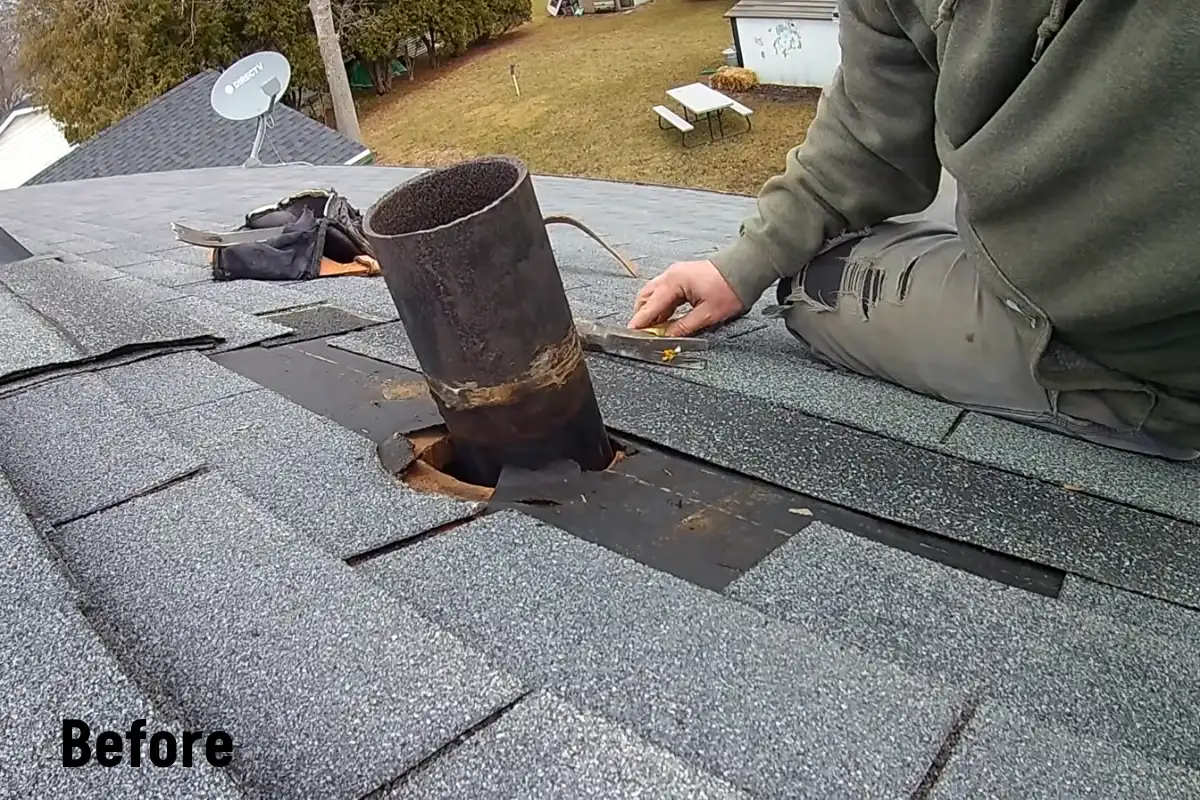
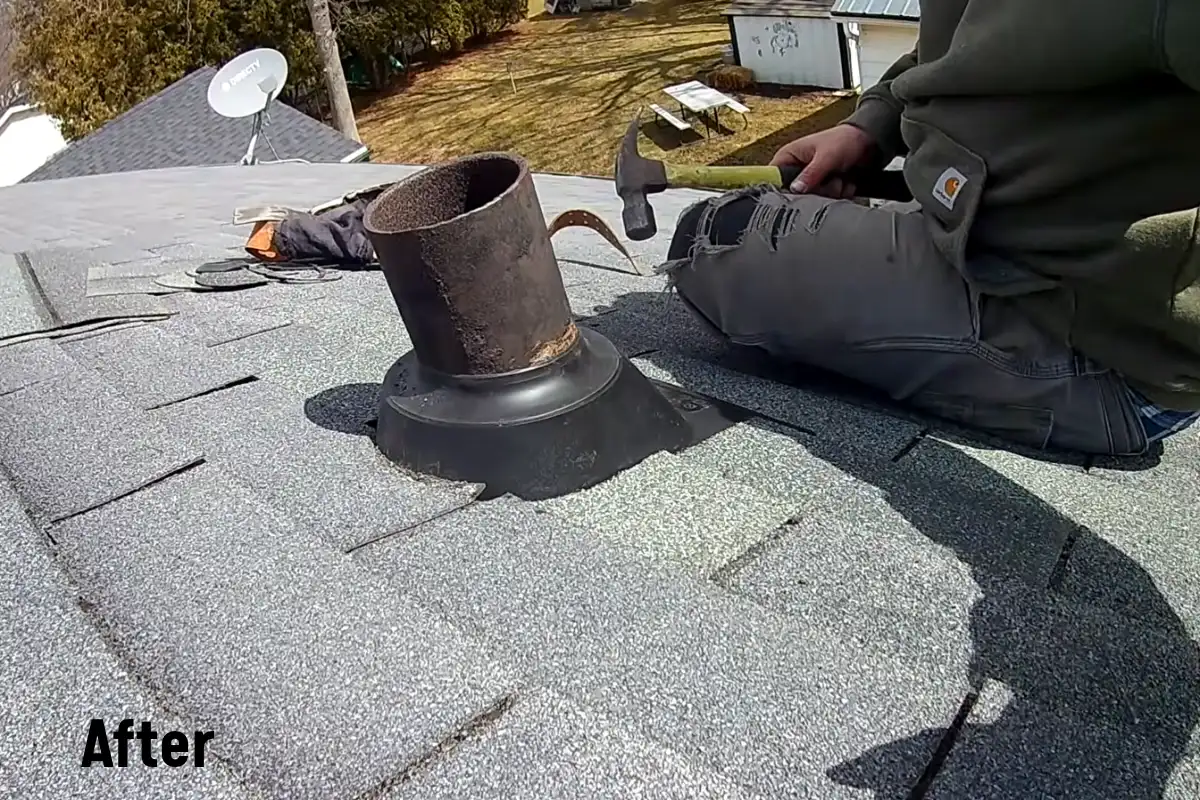
A plumbing vent pipe passes through the roof, and a boot seals around it. Rubber boots can crack as they age in sun and weather. A damaged boot may allow rainwater around the pipe and into the roof assembly.
Boot life varies with material, exposure and installation. The often-quoted 10-to-15-year range is only a general estimate, not a guarantee. Ask a roofer to inspect other similar-aged boots, but do not assume they all need replacement just because one has failed.
Sealant over a split or deteriorated boot is not a reliable substitute for replacing the failed part. The roof covering and flashing around the opening need to be handled correctly to shed water. Learn about our roof vent and pipe-boot repair service.
Example: a plumbing vent repair
This project example shows the repair after the plumbing vent opening was exposed. The replacement boot is installed around the pipe and integrated with the shingles. Repairs vary by roof and vent condition.
The hidden moisture problem: a bathroom fan vented into the attic
A bathroom exhaust fan should carry moist air outdoors. If its duct ends in the attic, warm shower air can condense on cooler surfaces. Over time, moisture may affect insulation and roof framing.
If you can enter the attic safely, look for a duct that ends loose in the space instead of connecting to an exterior vent. Damp insulation, staining on the roof decking or a persistent musty smell are reasons to ask for an inspection. A steamy bathroom can also have a blocked cap, crushed duct or weak fan; it does not by itself prove the duct ends in the attic.
The correction is to route the duct to an appropriate exterior termination with a functioning damper and supported, sealed ductwork. It should not discharge near a soffit intake, where moist air could be drawn back into the attic. A qualified professional can determine the appropriate route and materials.
Blocked soffits: the intake side of attic ventilation
Soffit vents sit beneath the eaves and can be blocked by insulation, paint or debris. Restricted intake may affect how well the attic ventilation system works. From the ground, look for visible obstructions; from a safely accessible attic, note whether insulation appears to cover the openings or whether baffles are present.
Do not move insulation or enter a tight, hot or unsafe attic to investigate. Share what you can see with a roofer or insulation professional, who can assess the system as a whole.
Ridge vent, turbine, box vent or powered fan: which is better?
There is no single best exhaust vent for every home. Selection depends on roof design, existing intake and exhaust, attic layout, and installation details.
- Ridge vents run along the roof peak and can provide continuous exhaust when correctly installed with compatible intake.
- Turbine vents use wind to turn a turbine. Bearings can wear, and their operation varies with wind and condition.
- Box vents are stationary vents placed at selected roof locations. Their performance depends on number, location and the rest of the system.
- Powered attic fans use a motor to move air. They require power and appropriate controls; adding one without assessing intake and other exhaust can cause airflow problems.
Combining different exhaust types without a system-level assessment can allow air to take a short path between vents instead of moving through the intended attic area. If an attic remains hot after vents are added, ask for an evaluation of the full ventilation layout rather than simply adding more vents.
What you can check safely, and what to leave alone
Use binoculars or a phone zoom from the ground to look for a damaged cap, a tilted or stationary turbine, a lifted ridge vent section, or blocked soffit openings. From inside an attic only if access is safe, look for damp insulation, water trails, dark marks on the decking, or a duct that ends loose.
Do not walk on the roof. Wet, steep and even dry roofs can be slippery, and roof materials can be damaged underfoot. If the inspection requires roof access, call a professional.
If there is a drip, move belongings away and put a container underneath if it is safe. Take dated photos and note whether the drip happens during rain or after showers. Stay clear of wet light fixtures, fans and wiring. If water is near electrical equipment, do not touch it; turn off power only if you can reach the breaker safely from a dry location. For active water intrusion, follow our emergency roof repair guidance.
If the vent opening or its flashing is damaged, a roofer may need to inspect that roof joint as part of the repair. See our guidance on roof flashing repair.
What affects roof vent repair cost in Sunnyvale?
These typical ranges are planning estimates, not fixed prices or exact quotes. The cost depends on what has failed and what an on-site inspection finds. A boot, exhaust cap, turbine and powered fan are different parts and require different work.
| Repair size | What it usually covers | Typical range |
|---|---|---|
| Small | One cracked pipe boot or a failed exhaust cap, replaced | $300 to $550 |
| Medium | A box vent, turbine or ridge vent section replaced, or several boots replaced in one visit | $450 to $850 |
| Large | An attic fan replacement, several vents at once, or vent work where wet decking or insulation also needs repair | $850 to $1,500 |
The roof material, pitch, access and number of vents can affect the estimate. Wet decking or insulation may add work, and interior ceiling repairs are usually separate. A roofer can provide an itemized written estimate after physically inspecting the roof and determining the repair scope. See our roof vent repair service page for service details and how to request an estimate.
When to call promptly
Arrange prompt professional help for an active drip, a stain that is spreading during rain, a loose or flapping vent cap, or visible moisture near electrical equipment. A persistent musty smell or damp attic materials should also be investigated before damage worsens. A small unchanged dry mark may allow a scheduled inspection, but do not assume it is harmless.
Before you hire anyone
Ask which vent has failed and how it was confirmed, whether the part will be repaired or replaced and why, whether the other vents and attic airflow will be checked, and whether photos and a written workmanship warranty are available. Ask for current proof of bond and insurance.
Verify the contractor's license with the CSLB Check A License tool. Confirm the license is active and lists the C-39 roofing classification.
Need help identifying a roof vent problem?
Tell us what you have noticed and when it happens. We can discuss the next step for roof vent repair in Sunnyvale.
Questions about roof vents
Why is there a water stain on my bathroom ceiling?
If it appears after rain, a roof opening such as a plumbing vent boot or exhaust cap could be leaking, though water can travel before it shows indoors. If it appears after showers even in dry weather, check whether the bathroom fan duct is connected to an exterior vent rather than ending in the attic. An inspection can confirm the source.
How long does a rubber vent boot last?
Rubber vent boots commonly last around 10 to 15 years, but sun exposure, material and installation affect their life. Have them checked during roof inspections; this range is not a guarantee.
Why is my attic so hot and musty?
Possible causes include blocked soffit intake, an unbalanced ventilation system or moisture from a bathroom fan duct that ends in the attic. The cause should be identified before adding vents or a powered fan.
My turbine vent squeaks or stopped spinning. Is that a problem?
A squeak or stalled turbine can indicate worn bearings or damage. It may move less air than it should, but attic ventilation depends on the full intake and exhaust system. Have the unit and surrounding roof checked.
Ridge vent or turbine vent: which is better?
Neither is best for every roof. The choice depends on the roof design, existing ventilation and available intake. Mixing exhaust types without considering the whole system can disrupt airflow, so ask a qualified roofer to assess the setup.
Is a bathroom fan vented into the attic a problem?
Yes. Moist air can condense on roof decking and insulation. The duct should discharge outdoors through an appropriate exterior vent, not into the attic or near a soffit intake.
Can I replace a vent boot myself?
Roof work can be hazardous, especially on wet or steep roofs. Keep your checks to safe observations from the ground or accessible attic, and leave roof access and flashing work to a professional.
How often should roof vents be checked?
Check them during routine roof inspections and after a major storm. The right interval depends on the roof, vent materials, age and exposure; inspect sooner if you see a stain, loose cap or other change.
More roof repair advice
Browse the roofing advice blog or read about flashing problems around roof openings.
Roof vent repair in Sunnyvale
Call us any time, day or night, and tell us what you see.
(669) 240-7171 View roof vent repair details