
Flat Roof Problems in Sunnyvale: How to Read a Roof That Drains Slowly
A flat roof is not level, and it does not shed water like a pitched roof. This guide shows you how to read membrane damage, why standing water matters, and when a patch is enough.
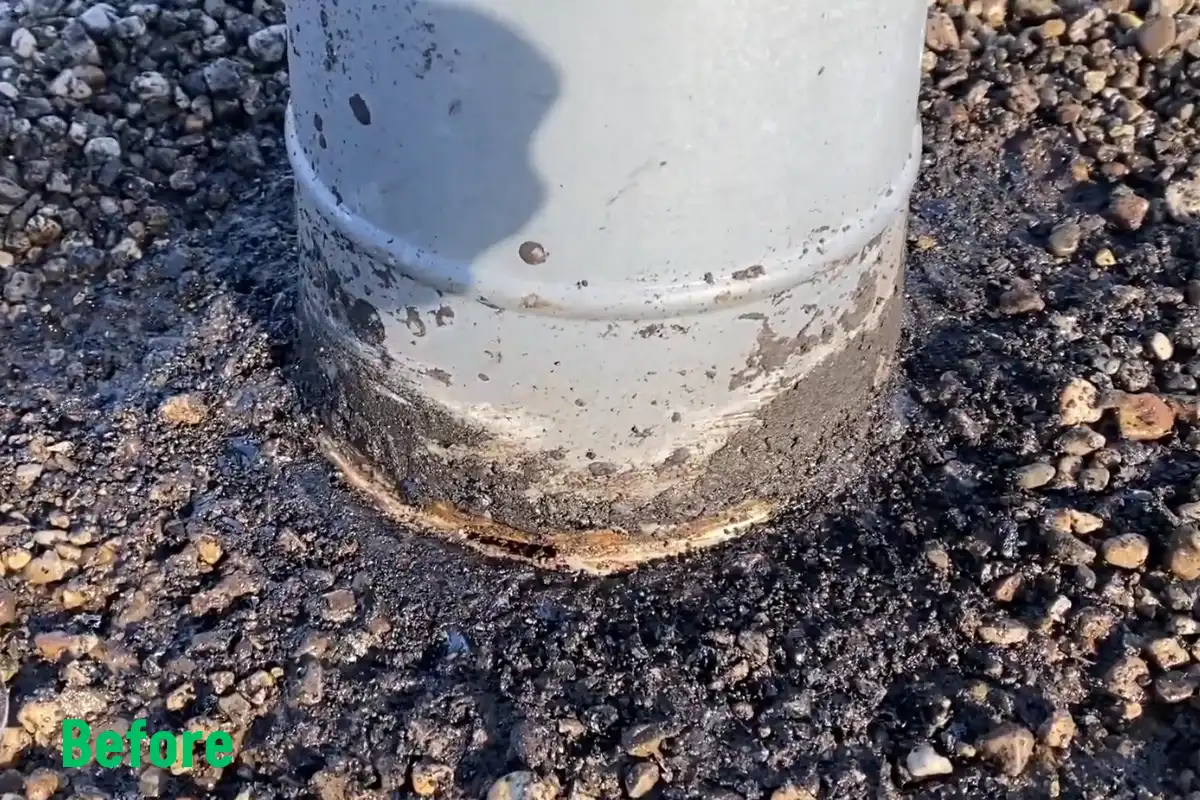
A flat roof is not level. It is a low-slope roof, built to direct water toward drains. Water drains more slowly than on a pitched roof, so seams, penetrations, drains, and low spots need to be considered when investigating a leak.
Flat and low-slope roofs appear on some homes, additions, garages, patio covers, apartment buildings, and small commercial properties around Sunnyvale. This guide shows how to read membrane damage, why standing water matters, what repairs cost, and when a patch may be enough.
How to read flat roof damage
Start from inside the building and from the ground, especially after rain. Do not climb onto a roof to inspect it; low-slope surfaces can still be slippery, fragile, or unsafe. A qualified roofer can inspect the membrane and drainage safely.
| What you see | What it usually means | How soon |
|---|---|---|
| Water remains after rain has stopped and nearby drainage has cleared | A low spot, blocked drain, or drainage design issue may be present | Schedule a drainage assessment |
| Open or lifting seams, or edges pulling away | The membrane joints are failing | Soon |
| Blisters or bubbles in the surface | Trapped moisture or air under the membrane | Have it checked |
| Cracking that looks like alligator skin, or flaking surface | The membrane surface is aging and drying out | This season |
| Punctures, cuts, or scrapes | Foot traffic, a dropped tool, or equipment work | Before the next rain |
| Leaves and debris around drains or scuppers | Drainage may be restricted | Arrange safe removal and check drainage |
| Damaged flashing at walls, vents, and edges | Water has a path in at every joint | Soon |
| Ceiling stains below, far from any visible roof damage | Water travelled sideways under the membrane | Schedule an inspection |
A stain inside a flat-roof building may be some distance from the opening that caused it. Water can travel beneath roofing layers before it becomes visible indoors, so the stain alone does not identify where to patch. See our guide to tracing a roof leak to its source.
Ponding: when standing water becomes a problem
Water that remains well after rain has stopped and drainage has cleared may indicate ponding. There is no single time threshold that applies to every roof system and design. Persistent water can point to a low spot, a blocked drain or scupper, or inadequate slope; have the drainage assessed against the roofing system's requirements.
Persistent ponding can keep membrane areas and seams wet, collect debris, and add load to the roof. The effect depends on the roof's design and condition. If you notice visible sagging or deflection, keep people away from the affected area and contact a qualified professional promptly.
Fixes depend on the cause:
- Have drains, scuppers, and gutters safely cleared of leaves and debris.
- Add tapered insulation or small crickets to steer water toward the drains.
- Add or move a drain when the roof cannot shed water the way it is built.
- Replace a sagging section if the deck beneath has dipped.
Patching a leak without asking why water is sitting there is only doing half the job. The next rain will fill the same low spot again.
Seams, flashing, and parapets: where most flat leaks start
Flat-roof leaks can occur where roofing sections meet, or where the roof meets walls, vents, or equipment curbs. Open seams, lifted edges, and cracked sealant are possible warning signs. For roof-joint details, see our guide to flashing repair at walls, vents, and roof edges.
Low walls around the roof are called parapets. They need their own flashing and cap to keep water from running behind them. When parapet flashing cracks or pulls away, water enters at the wall line and shows up inside far below the roof edge.
Equipment makes this worse. Air conditioners, solar panels, and vents each add a curb or penetration, and each one is a joint that must stay sealed. Foot traffic around that equipment scrapes and punctures the membrane. Walkway pads help where technicians travel often, because they spread the load instead of grinding one path into the surface.
What kind of flat roof do you have?
Which material you have decides how the repair is done. Using the wrong patch can damage the roof. Roofing cement from a hardware store is not compatible with every material, and the wrong product can hide a leak that is still active.
| Material | How to spot it | What usually fails first |
|---|---|---|
| Built-up roof, tar and gravel | Layers of asphalt and fabric, often topped with gravel | Surface wear, gravel displacement, blocked drains |
| Modified bitumen | Dark rolled sheets with overlapping edges | Seam failure, surface alligatoring, thermal cracking |
| Single-ply, TPO, PVC, or EPDM | One large smooth sheet, often white, gray, or black | Seam separation, shrinkage at edges, punctures |
| Spray foam with coating | A foamy layer under a protective coating | Coating wear, which then exposes the foam |
Service life varies substantially by roofing system, product, installation, climate, drainage, and maintenance. Avoid using a single lifespan range to judge a specific roof; its condition and the manufacturer's guidance are more useful.
If you see gravel, it is probably a built-up roof. A smooth white or gray sheet is often single-ply. Dark rolled sheets with overlapping edges are often modified bitumen. When you call, naming what you see helps the roofer bring the right patch material.
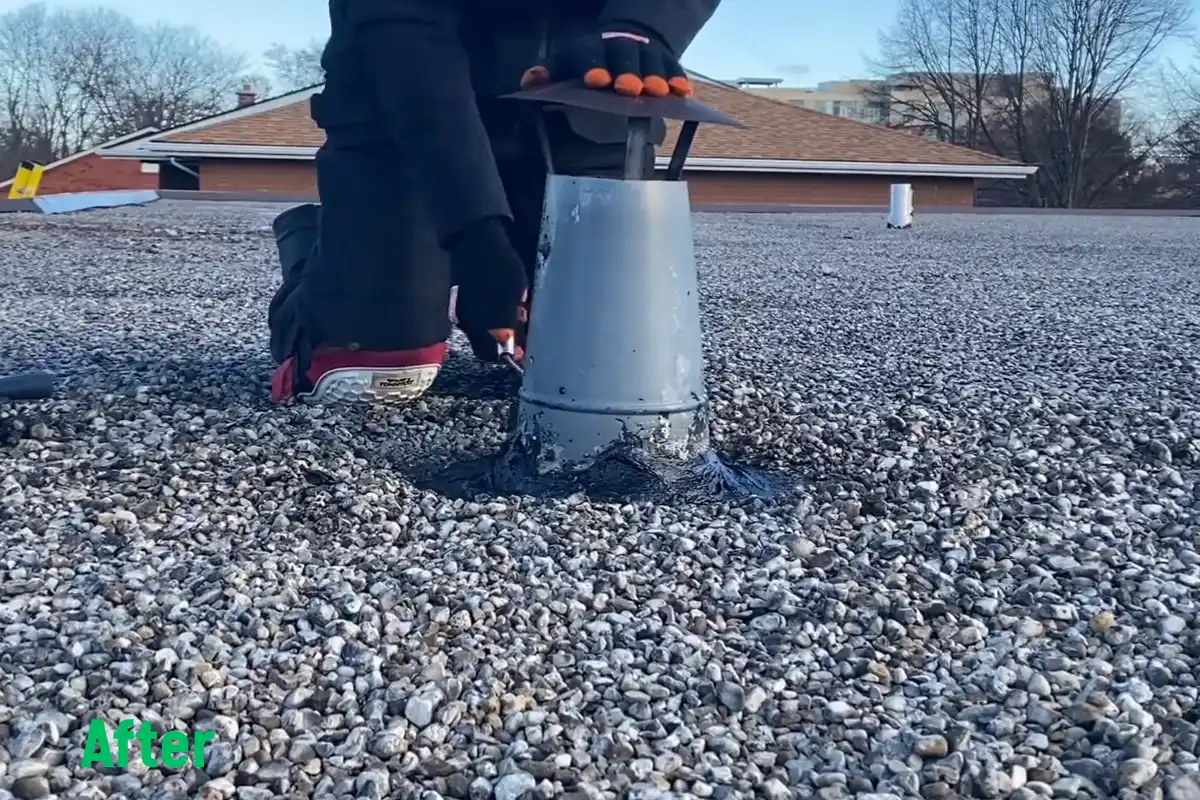
When water gets into the insulation
Many flat roofs have insulation under the membrane. Once water gets in, it can spread sideways under the surface, so the stain inside may be far from the actual opening. Wet insulation also stops insulating, and it can hold moisture against the deck.
Moisture scans can map the wet area. Wet insulation generally has to be removed and replaced, because patching the surface above it will not dry it out. This is the step that turns a small patch into a medium or large repair, and it is also the step that makes the repair last. A patch over wet insulation traps the moisture in place.
Wind near the bay, and membrane edges
Wind exposure varies by building and location, including across Sunnyvale. On low-slope roofs, loosened membrane edges, flashing, and seams can be vulnerable to wind-driven rain. After a windy storm, a qualified roofer can assess edges, parapets, and equipment curbs as well as the roof field.
Wind-related damage depends on the roof's construction and condition. A visual check from the ground cannot rule out hidden damage, even when the middle of the roof looks fine.
Trees, debris, and drains
Trees in Sunnyvale neighborhoods, including areas around Las Palmas Park and Ortega Park, can drop leaves and other debris onto roofs. On low-slope roofs, debris can collect near drains and scuppers and restrict drainage.
Follow the roofing system's maintenance guidance and arrange safe drain checks, particularly after storms or when nearby trees shed leaves. Do not climb onto the roof to clear debris yourself.
Signs of a failing drain are easy to learn. Rings of dried sediment mark where puddles keep forming. A strainer that is cracked, loose, or missing lets debris straight into the drain. Slow flow or gurgling during rain means the drain is struggling. Inside, watch for ceiling stains and damp walls near the drain line.
Older roofs around downtown
The Heritage Park Museum on Remington Drive preserves Sunnyvale's early history. It is a local history reference, not evidence of the age or condition of nearby roofs. On a low-slope roof, membrane condition, seams, drainage, and insulation all matter when assessing repair options.
Age alone does not determine whether repair or replacement is appropriate. A qualified inspection should consider the extent of surface damage, insulation condition, drainage, and whether earlier repairs have held.
After a storm: stay safe, document, and call
Flat roof repairs may require dry weather. Patches and sealants need a clean, dry surface to bond, and temperature can matter too. If water is coming in before a permanent repair is possible, ask a professional about temporary protection.
- Do not climb onto the roof or approach areas that may be unstable. Photograph visible damage from the ground or indoors, if it is safe to do so.
- Note the date, storm conditions, visible water, and any new interior stains. Do not delay urgent steps to gather photos.
- If water is entering or rain is forecast, contact a roofer promptly and ask about professional temporary protection. Do not attempt to cover the roof yourself. See our emergency roof repair guidance.
- If you are considering an insurance claim, contact your insurer and ask what documentation it requires. Photos may help document damage, but coverage and deductible amounts depend on the policy and claim.
Arrange prompt professional help if water is entering the building, the ceiling is sagging, or an opening is exposed to forecast rain. If a ceiling appears unstable, keep people clear of the area and seek appropriate emergency assistance.
What a roofer checks beyond the patch
A patch is only one part of a flat roof repair. A good inspection checks the whole system around it.
The roofer may assess drains, scuppers, gutters, and roof slope, because a surface patch alone may not resolve a drainage issue. The inspection may also check insulation moisture, flashing and edges at walls, parapets, vents, drains, and equipment curbs, along with blisters, punctures, and surface wear.
That is why an inspection walks the entire roof, including flashing and edges, instead of only the stained area inside. The stain tells you water got in. The roof tells you where and why.
What flat roof repair usually costs in Sunnyvale
Prices below are ranges from our flat roof service page, not quotes. Your exact price comes after an inspection.
| Repair size | What it usually covers | Typical range |
|---|---|---|
| Small | A puncture patch or a resealed seam | $300 to $900 |
| Medium | Flashing, edge, or drain repair, with a ponding area corrected | $800 to $2,500 |
| Large | Wet insulation removed and replaced, or several repairs across the roof | $2,000 to $5,000 |
Ranges are for repairs only, not a full roof replacement. The medium and large ranges overlap because scope varies so much. A drain repair with a ponding correction and a multi area repair can land in the same price band for different reasons.
What moves the price? Roof material matters, because each type has its own repair method. Size of the damaged area matters, and how many problem spots there are. Wet insulation adds work, because it must be removed and replaced. Drainage fixes add scope, such as tapered insulation or a new drain. Access and equipment on the roof matter, because air conditioners and solar panels may need to be worked around. Weather timing matters too, because a temporary measure may be needed until the surface is dry.
When to call promptly, and when it can wait
Call promptly if you see any of these:
- Water coming in, or a stain that is spreading.
- Water that remains well after rain has stopped, especially with a stain below it.
- A puncture or open seam with rain on the way.
- Damage after strong wind, a big storm, or an earthquake.
These can wait for a scheduled inspection, but do not ignore them:
- A small amount of debris on the roof with clear drains and no stain.
- Minor surface wear with no stain and no open seams.
- A single blister with no stain below it.
- A slow drain found outside storm season, with no ponding yet.
Delaying an assessment while water is entering can allow damage to continue. Promptly identifying the source and checking the affected roof layers helps determine the appropriate repair scope.
Before you hire anyone
Ask these questions before work starts:
- What material is my roof, and is the patch compatible with it?
- Will you check for wet insulation under the membrane?
- How will you deal with the standing water?
- Do you walk the entire roof, including flashing and edges?
- Is the repair covered by a written warranty, and for how long?
Verify the license. Use the CSLB Check A License tool to verify a contractor's license on the CSLB site. Confirm the license is active and lists the C-39 roofing classification. Ask the contractor directly for current proof of bond and insurance.
The short version
A low-slope roof drains more slowly than a pitched roof, so persistent standing water, seams, punctures, and low spots warrant attention. Water adds load to a roof; visible sagging should be treated as a safety concern.
Start with signs visible indoors or from the ground. Open seams, blisters, surface cracking, clogged drains, and persistent standing water can warrant a professional inspection. A patch may suit contained damage on an otherwise sound membrane; widespread damage or wet insulation may require more extensive work.
Address the underlying drainage issue as well as the leak. After a storm, stay off the roof, document visible damage if safe, and call a roofer promptly if water is entering or rain is forecast.
We serve homes and small properties across Sunnyvale, including downtown and neighborhoods near the bay.
For flat roof repair in Sunnyvale, see our flat roof repair service or call us at (669) 240-7171.
This post was written by the team at Roof Repair Sunnyvale CA, a certified California roofing contractor serving Sunnyvale since 2015. It is general information and does not replace an inspection of your roof.
Questions about flat roofs
Why does my flat roof leak every time it rains?
Flat roofs drain slowly, so water has time to find seams, punctures, worn flashing, or low spots. A leak that returns with each rain usually means the source has not been found, or the drainage problem behind it has not been fixed.
Can a flat roof be patched, or does it need replacing?
Patching works when the damage is contained and the rest of the membrane is in good shape, such as a puncture, a split seam, or a failed flashing detail. Widespread cracking, wet insulation in many places, or repairs that keep failing point toward replacement.
How long can water sit on a flat roof?
Water that remains well after rain has stopped and drainage has cleared may indicate ponding. The assessment depends on the roof design and system requirements. Persistent water can wear the surface and may point to a drain, low spot, or slope issue.
Can I use roofing cement or sealant to fix it myself?
It is not recommended. Some products are not compatible with certain roof materials and can damage them, and a coat of sealant can hide a leak that is still active. A roof is also not a safe place to work without the right equipment.
What are the main types of flat roofing?
The most common are built-up roofs with tar and gravel, modified bitumen, single-ply membranes such as TPO, PVC, and EPDM, and spray foam with a coating. The repair is matched to the material, and the wrong patch can damage the roof.
Does flat roof repair need dry weather?
Repair conditions depend on the material, product, and weather. Patches and sealants generally need a clean, dry surface to bond. If water is entering before a permanent repair is possible, ask a professional about temporary protection.
What is the difference between ponding and normal slow drainage?
Normal drainage time varies by roof design and conditions. Water that persists after nearby drainage has cleared may indicate ponding from a low spot, blocked drain, or slope issue. Rings of dried sediment may mark where water has repeatedly collected.
How often should flat roof drains be cleaned?
Cleaning frequency depends on the roof, surrounding trees, and the roofing system's maintenance guidance. Arrange safe inspections after major storms or when drains may be blocked, and have a roofer assess persistent standing water.
Flat roof ponding or leaking? Call us.
Tell us what you see and where. Photos from the morning after rain are a good start.
(669) 240-7171 Call about flat roof damage