
Tile Roof Problems in Sunnyvale: How to Read the Damage When the Tiles Look Fine
A tile roof can look perfect from the street and still leak. Learn how to spot damage from the ground, why the hidden layer matters, and when repair may no longer be enough.
- Certified California roofing contractor
- Bonded and insured
- Open 24/7
- Serving Sunnyvale since 2015
A tile roof can look perfect from the street and still leak. The tiles shed most of the rain, but the hidden underlayment beneath them helps keep water out of the home.
Tile roofs show up across Sunnyvale, from homes near downtown Murphy Avenue to Lakewood Village. If you are researching tile roof repair in Sunnyvale, this guide shows how to read tile damage from the ground, why the hidden layer matters, what repairs cost, and when repair may no longer be enough.
How to read tile damage from the ground
Do not climb on a tile roof. Tiles can crack under body weight, and the surface is slippery. Use binoculars or a phone zoom, walk around the house, and look up.
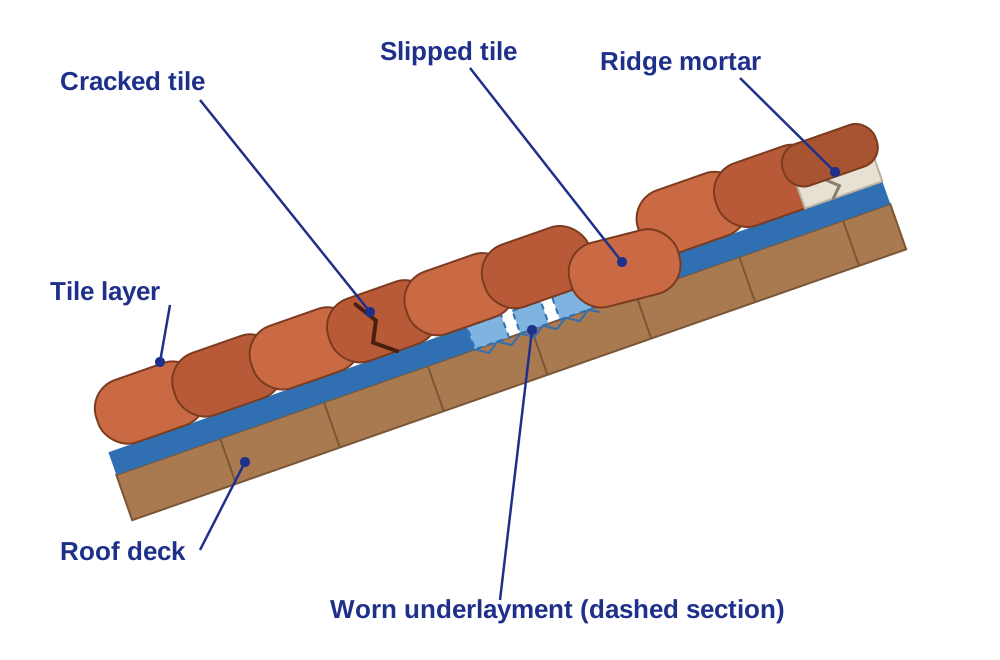
| What you see | What it usually means | How soon |
|---|---|---|
| Cracked or broken tiles, or pieces in the yard or gutters | Water may reach the layer underneath | Arrange an assessment promptly, especially before rain |
| Slipped tiles sitting crooked, or a gap in the pattern | A fastener or adhesive may have failed, or wind may have moved the tile | Arrange an inspection promptly |
| Crumbling or cracked mortar along the ridge or hips | The ridge bedding may be aging or shifting | Schedule an inspection |
| Ceiling stains after rain, even when tiles look fine | The underlayment or flashing may be failing | Schedule an inspection |
| Damp insulation, dark wood, or daylight in the attic | Water may already be getting through | Promptly |
| Moss or heavy debris in valleys or shaded areas | Moisture may be lingering against the tiles | Have it checked |
| White stains on the tile surface | Often mineral deposits, mostly cosmetic on their own | Not urgent |
A stain below a chimney or a wall may be flashing, not tile. A stain with no visible tile damage may point to an issue underneath, such as underlayment or flashing. If you see ceiling stains after rain, read about roof leak inspection and repair and mention the stains when arranging an inspection.
Why a tile roof leaks with no broken tiles
A tile roof works in two stages. The tiles on top overlap and shed most of the rain. Underneath them, a water-resistant layer called underlayment catches water that gets past and directs it toward the gutters.
Tile is generally long-lived, but its service life varies by material, installation, and conditions. The underlayment beneath it often wears out sooner. Ask a roofer to assess the roof's actual condition rather than relying on age ranges alone.
Long periods of sun and heat can contribute to aging of the hidden layer. Over time, underlayment may dry, crack, or fail at seams and penetrations. If it fails, water can get through even when the tiles appear intact.
The Heritage Park Museum on Remington Drive is a replica of an 1850 Murphy family home and offers a local reminder of Sunnyvale's history. A landmark's age does not establish the age or condition of nearby roofs. If a tile roof leaks with no visible damage, an inspection should check the underlayment rather than assume that replacing a tile alone will solve it.
Patching a surface crack does not always stop the problem. If the underlayment is old and brittle in the leaking area, a lasting repair may involve lifting the tiles in that section, replacing the underlayment, and relaying the tiles. Reusing the existing tiles, when they are in suitable condition, can help preserve the roof's appearance.
Wind near the bay and slipped tiles
Wind exposure varies from one home to another, including around the bay side near Baylands Park. During strong winds, tiles with weakened fasteners or adhesive may lift, and wind-driven rain can enter joints that usually shed water in a straight downpour.
A slipped tile is easy to spot from the ground. It sits crooked or leaves a visible gap in the pattern. One slipped tile may be a simple reset, but several slipped tiles after one storm can point to fasteners failing across an area and deserve a closer look.
Ground movement matters here too. The Bay Area shakes, and shaking can shift tiles or crack mortar. After an earthquake, look from the ground for new gaps in the pattern, fresh cracks along the ridge, or pieces in the yard. A roof that survived the shaking may still have damage that only shows up in the next rain.
Trees, debris, and moss in the valleys
Mature trees and shade, including in neighborhoods around Las Palmas Park and Ortega Park, can affect nearby roofs in several ways.
Falling branches can crack tiles. Leaves and debris can collect in valleys, the channels where two roof slopes meet. A clogged valley can hold water rather than moving it along. Shaded slopes may grow moss, which holds moisture against the tile, hides cracks, and slows drainage.
Moss alone is not an emergency, but it is more than cosmetic. Cleaning should be gentle. Harsh pressure washing can chip tile surfaces and push water under the tiles, so ask how any cleaning will be done before it starts.
Ridge mortar and flashing: joints that fail
The ridge is the high line along the top of the roof, capped with ridge tiles. Hips are the sloping high lines where roof slopes meet. Both are often bedded in mortar. Mortar can age, crack, and shift. Crumbling or cracked ridge mortar can let wind-driven rain in along the top of the roof, where it may travel before it shows inside.
Flashing is the metal at valleys, walls, chimneys, and vents. Corroded metal or shifted tiles around flashing can open a path for water that looks like a tile leak. A stain below a chimney may be flashing, not tile, and a stain in a valley may be valley metal. When a repair is planned, ask whether flashing and mortar near the damage will be checked too. See our guide to flashing repair at roof joints and penetrations.
Matching tiles and spare tiles
Tile comes in many profiles, colors, and finishes. Common shapes include barrel (also called Spanish or mission style), S-shaped, and flat. Manufacturers change or discontinue lines over time, and weathering changes how a tile looks. A new tile may stand out against ones that have been in the sun for years.
Roofers may use spare tiles saved from the original installation, or move tiles from a less visible part of the roof to keep visible slopes consistent. Check the garage, attic, or side yard for leftover tiles, and tell your roofer if you find any.
After a storm or earthquake: document damage and call for help
Tile pieces on the ground after wind or shaking can be concerning. Photograph visible damage from the ground before anything is moved or covered. Photograph gaps in the pattern, fallen pieces that are safely accessible, and interior stains. Note the date and the storm or earthquake. Keep broken tiles only if you can do so safely; they may help identify a match.
Check the attic for water stains, wet insulation, or daylight only if it is safe to do so. If rain is coming or water is entering the home, contact a roofer promptly. Ask a qualified professional about temporary protection; do not climb onto or cover the roof yourself. See our emergency roof repair guidance.
If you are considering an insurance claim, contact your insurer and ask what documentation it requires. Photos may help document the damage, but coverage and deductible amounts depend on your policy and claim.
If tiles are missing, arrange a professional assessment promptly, especially when rain is forecast. Do not wait for a fixed number of days if water is entering the home or the roof deck is exposed.
What a roofer checks beyond the tiles
A tile is only the top layer. A good inspection checks what sits underneath and around it.
Underlayment is the water-resistant layer over the wood deck. It is the backup if water gets past the tiles, but it was not designed to take weather by itself for long. Wet or damaged underlayment needs fixing before tiles go back on.
The wood deck matters too. Soft or rotted wood cannot hold fasteners and must be repaired first. Battens and fasteners matter as well: rusted fasteners or rotted battens can let tiles slip, even when the tiles themselves are sound.
Flashing at valleys, walls, chimneys, and vents is another possible source of leaks that look like tile problems. Attic ventilation is another factor a roofer may consider; heat and moisture conditions vary, so an inspection should assess the roof system rather than assume ventilation is the cause of underlayment failure.
That is why an inspection covers the area around the damage, not only the damaged tiles. Nearby mortar, flashing, and fasteners help show how far the problem spreads.
What tile roof repair in Sunnyvale usually costs
These ranges match the ones on our tile repair service page. They are estimates, not quotes; the exact price depends on an inspection and repair scope.
| Repair size | What it usually covers | Typical range |
|---|---|---|
| Small | Replacing a few cracked or slipped tiles with matching ones | $450 to $900 plus |
| Medium | Lifting and resetting a section, with ridge or hip tiles re-bedded | $900 to $2,500 plus |
| Large | Replacing underlayment across an area, then relaying the tiles | $2,000 to $5,500 plus |
Ranges are for repairs only, not a full roof replacement.
The large range covers underlayment work across an area, a bigger job than resetting tiles because many tiles must be moved, stacked, and laid back. Price can also depend on tile type and availability, how much of the roof is lifted, underlayment condition, roof pitch and access, flashing or mortar work, and the care needed to protect brittle tiles.
When to call promptly, and when it can wait
Call promptly if tiles are missing or slipped with rain on the way, bare underlayment or wood is exposed, a ceiling stain is spreading, or damage follows strong wind, a major storm, or an earthquake.
A few cracked ridge-mortar joints without stains or missing tiles, moss or debris without other damage, white mineral stains, or a single slipped tile outside storm season may be suitable for a scheduled inspection. Do not ignore them. Delaying an assessment can allow water to reach the underlayment or wood deck and may increase repair scope, particularly if rain is entering.
Before you hire anyone
Ask whether the roofer has repaired this type of tile before, will check underlayment and flashing, how tiles will be matched and protected, and whether the work comes with a written workmanship warranty.
Then verify the license. Use the CSLB Check A License tool to verify the contractor's license. Confirm it is active and lists the C-39 roofing classification. Ask the contractor directly for current proof of bond and insurance.
The short version
Tiles shed most of the rain. Underlayment helps keep out the rest. When tiles crack, slip, or shift, water may reach the underlayment, which was not built to take weather alone for long.
Read the damage from the ground. Missing tiles before rain need prompt attention. A leak with no visible damage may involve underlayment or flashing and deserves an inspection, not just a new tile on top. Moss and debris in valleys deserve attention before they trap moisture.
Repair may fit scattered broken tiles, one leaking area, or a worn ridge. A larger job may make sense when underlayment has failed across much of the roof, or many tiles are cracked. Tiles may be lifted, kept, and re-laid over new underlayment if suitable for reuse. After a storm or quake, photograph visible damage from the ground, call a roofer, and ask about professional temporary protection if needed.
We serve homes across Sunnyvale, from neighborhoods around the Sunnyvale Public Library on Olive Avenue to Lakewood Village near Lakewood Park.
Not sure which kind of roof you have? Tile is thick and rigid; asphalt shingles are thinner, flat pieces with a gritty surface. Learn about asphalt shingle roof repair if that better describes your roof.
For tile roof repair in Sunnyvale, see our tile roof repair service or call us at (669) 240-7171.
This post was written by the team at Roof Repair Sunnyvale CA, a certified California roofing contractor serving Sunnyvale since 2015. It is general information and does not replace an inspection of your roof.
Questions about tile roofs
Can a single cracked roof tile be replaced?
Yes. Tile roofs are built so individual tiles can be removed. The tiles around the damaged one are lifted, the damaged tile is swapped for a matching tile, the layer beneath is checked, and everything is put back.
Is a cracked roof tile an emergency?
Not always, but it should not wait long. A cracked tile can let water reach the underlayment. If rain is forecast or water is already coming in, call right away and ask about a temporary cover.
Why does my tile roof leak when no tiles look broken?
The tiles are only the top layer. A leak with no visible damage usually comes from worn underlayment, failed flashing, cracked ridge mortar, or a slipped tile that is hard to see from the ground.
How long does tile underlayment last compared with the tile?
Tile can last for decades, while underlayment often wears out sooner. Published lifespan ranges vary by material and conditions; have the underlayment inspected rather than relying on age alone.
Can I walk on my tile roof to check it?
Please do not. Tiles can crack under your weight, the surface is slippery, and a fall from a roof can cause serious injuries. Use binoculars or a zoomed phone photo from the ground.
Will replacement tiles match my roof?
They often come close, but weathering and discontinued colors can make a new tile look different at first. Roofers use spare tiles or salvaged ones to keep the visible slopes consistent.
Is moss on a tile roof a problem?
Moss alone is not an emergency, but it is more than cosmetic. It traps moisture against the tile, hides cracks, and slows drainage in valleys. Gentle cleaning plus a check for damage underneath is the right response. Harsh pressure washing can chip tiles and push water underneath them.
What should I check after an earthquake?
Walk around the house and look from the ground for new gaps in the tile pattern, fresh cracks along the ridge, and pieces in the yard. Check the attic for stains or daylight. Shaking can shift tiles and crack mortar without leaving obvious damage from the street, and the next rain is when that damage shows up.
Cracked or slipped tiles? Call us.
Tell us what you see and whether anything is leaking. Photos from the ground are a good start.
(669) 240-7171 View tile roof repair details