
Roof Flashing Problems in Sunnyvale: How to Spot Them Before They Become a Leak
Most roof leaks start where the roof meets something else. Learn how to spot flashing problems early, what repairs typically cost in Sunnyvale, and when caulk is not enough.
- Certified California roofing contractor
- Bonded and insured
- Open 24/7
- Serving Sunnyvale since 2015
Roof flashing is the material that seals joints where a roof meets a chimney, vent pipe, wall or valley. Gaps, rust, cracked sealant and indoor stains can signal a problem. Check from the ground or attic; do not climb onto the roof. Repairs range from resealing sound metal to replacing damaged flashing, and the right fix depends on what an inspection finds.
What roof flashing actually does
A roof sheds water by overlapping layers, like fish scales. That system breaks wherever the roof meets something else or changes direction.
Flashing bridges those gaps. It catches water at the joint and sends it back onto the roof surface, so it can run down toward the gutter. Different joints use different flashing: step flashing runs along a wall that meets the roof; counter-flashing covers the top of base flashing, often at a chimney; pipe boots seal around vent pipes; valley flashing lines the valley where two slopes meet; and drip edge guides water off the roof edges.
If one of these pieces fails, the joint can leak even when the rest of the roof is in good condition. For more on the repair process and flashing types, see our roof flashing repair service in Sunnyvale.
Seven warning signs you can spot without climbing on the roof
Use binoculars or a phone camera from the ground. You can also check the attic with a flashlight if you can reach it safely. Do not walk on the roof.
- Stains on a ceiling or wall near a chimney, vent or roof-to-wall joint. Water can travel along framing before it drips, so the stain may not be directly below the leak.
- Rust streaks on flashing or on brick below it. Rust can indicate the metal's protective coating has worn away; rust-through can leave an opening.
- Gaps or bent metal where the roof meets a chimney or wall. A lifted edge can let rain get underneath.
- Cracked, shrunken or missing sealant along a joint. Caulk and rubber often need attention sooner than the metal itself.
- A cracked rubber collar around a vent pipe. A damaged boot can let water run down the pipe; learn more about roof vent and pipe-boot repair.
- Stains on an outside wall below a roof-to-wall joint. This can point to step flashing or missing kickout flashing.
- A leak that appears mainly during wind-driven rain. Wind can push water sideways into joints that usually shed rain.
Several signs together or a spreading stain may mean water is actively getting in. A stain alone does not confirm the source, so have the area inspected rather than assuming the flashing is the cause.
Why flashing fails in Sunnyvale homes
Metal and roofing expand and contract with temperature changes. Over time, that movement can work joints loose and put stress on sealant. Ultraviolet light also dries out caulk and rubber boots, and older steel flashing can corrode.
Installation shortcuts can cause early failure too. Pieces that do not overlap enough, exposed fasteners, or caulk used in place of metal may leave a path for water. Mismatched metals can corrode where they touch, so replacement materials should be compatible with the existing roof.
Can you just caulk it?
Caulk can seal small gaps in otherwise sound flashing, but it is not a lasting fix when the metal is rusted through, bent, loose or missing.
Sealant is exposed to sun and movement, and the bond can break as materials expand and contract. Water may then get behind the sealant. If a leak returns after sealing, the problem could be hidden under shingles or in the counter-flashing joint. Reapplying caulk without checking the whole joint may conceal rather than fix the cause.
Repair or replace? How to tell
Not every flashing problem needs new metal. The appropriate repair depends on the condition of the flashing and the materials beneath it.
| What is found | Possible repair |
|---|---|
| Small gaps in sound metal | Reseal with a compatible sealant |
| Cracked or split vent boot | Replace the boot |
| Surface rust, metal still solid | Clean, treat and reseal if appropriate; monitor its condition |
| Rust through the metal, bent or pulled loose | Replace the affected flashing section |
| Missing flashing | Install new flashing |
| Soft or rotted wood underneath | Repair the wood before restoring the flashing |
| Leak returns after sealing | Inspect the full joint, including concealed materials |
The important step is addressing the source of the water before covering the area again. A roofer should explain what they found and why the proposed repair fits the condition.
A real repair example
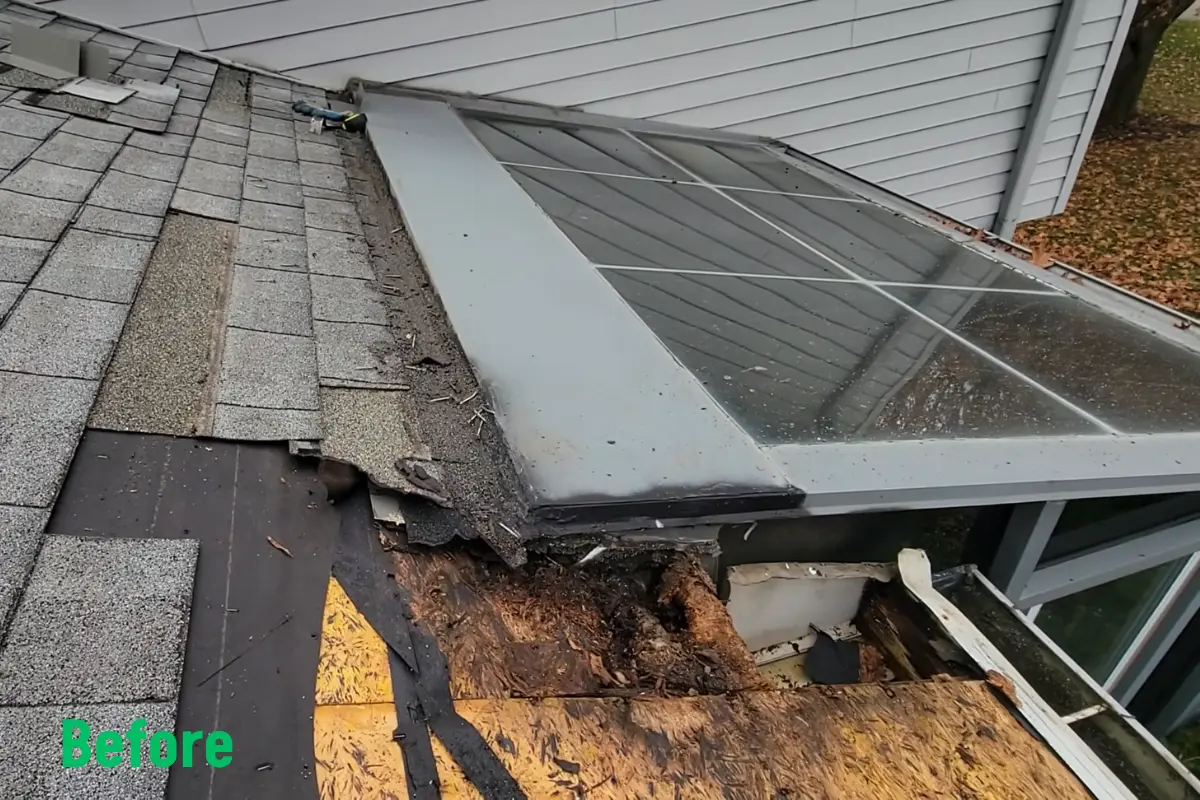
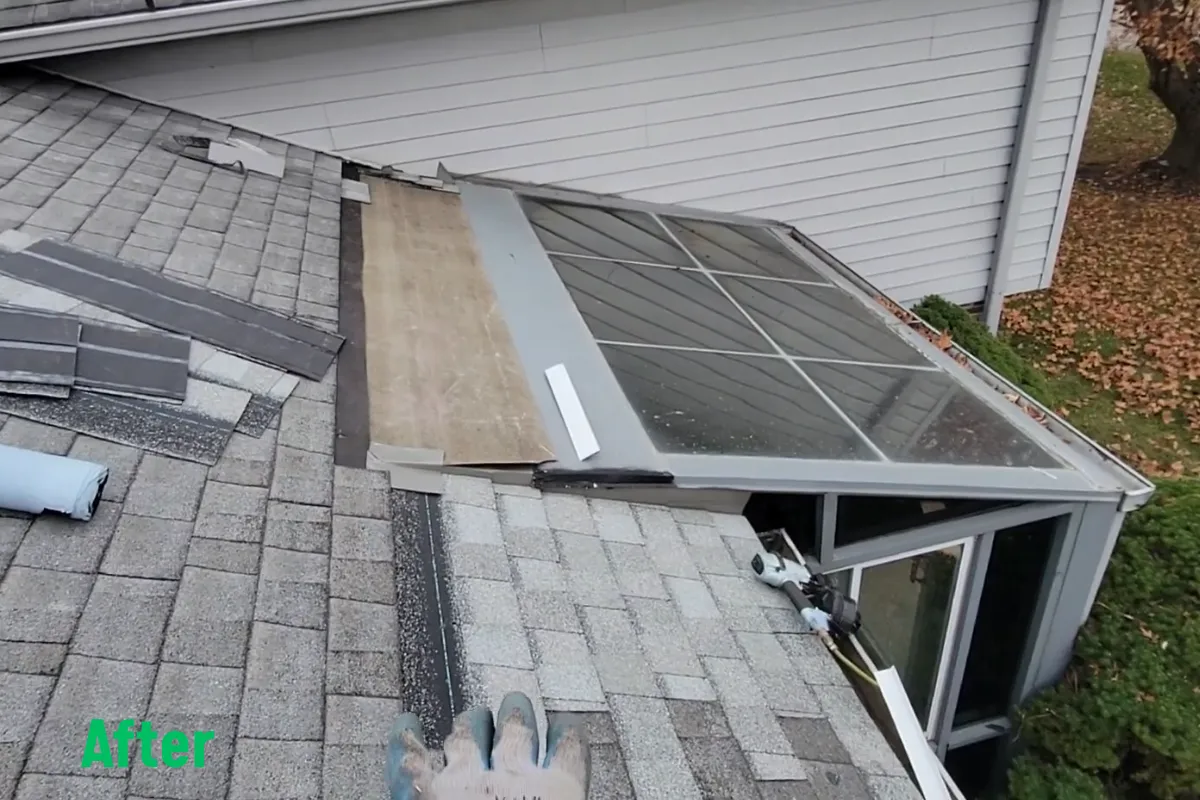
In the project shown below, the roofing was opened around a sunroom connection and deteriorated decking was exposed. The damaged wood was repaired before the flashing base and surrounding roofing were put back. It illustrates why a leak may need more than a surface bead of caulk; the right scope depends on what is found when the joint is inspected.
What flashing repair usually costs in Sunnyvale
These are typical ranges published on our flashing repair service page, not quotes. Your exact price depends on the work needed and an inspection.
| Repair size | What it usually covers | Typical range |
|---|---|---|
| Small | Resealing sound flashing, or replacing a pipe boot or vent cover | $250 to $500 |
| Medium | Replacing a run of step flashing, a section of drip edge or vent flashing | $500 to $1,500 |
| Large | Full chimney flashing with counter-flashing, plus a chimney cricket or fascia and soffit repair | $1,500 to $2,500+ |
Price can vary with roof material, height and access, the size of the flashing area, and hidden damage. Tile roofs may require lifting and replacing tiles around the joint. Rotted decking or framing can add work that is not visible until the area is opened.
Which metal lasts longest?
Aluminum and galvanized steel are common flashing materials. Copper costs more but can last longer. These are typical lifespan ranges, not guarantees; exposure, installation and maintenance affect service life.
| Material | Typical lifespan | Cost level |
|---|---|---|
| Aluminum | 20 to 30 years | Low to moderate |
| Galvanized steel | 15 to 25 years | Low |
| Copper | 50 years or more | High |
| Rubber vent boots | 10 to 15 years | Low |
Sealant often needs attention sooner than the metal. Avoid placing incompatible metals together; a roofer can check which materials suit the existing roof.
Does homeowners insurance cover flashing repair?
Coverage depends on your policy and what caused the damage. Sudden damage from a covered event may be treated differently from gradual wear, rust or poor installation. Check your policy and deductible, document the damage before repairs begin, and contact your insurer if you are considering a claim. A written inspection note can help you explain what was found, but it does not guarantee coverage.
When to call a roofer, and when it can wait
Arrange prompt help if you see active dripping, a stain spreading during rain, flashing that has separated or is flapping, water near electrical fixtures, or a leak that began after a storm. Avoid touching wet electrical areas. If water is coming in now, follow these emergency roof leak steps: move belongings away, place a container under the drip if safe, and note where the stain is.
A small dry stain that has not changed or surface rust without an obvious opening may allow a scheduled inspection, but do not ignore it. The source of a ceiling stain can be difficult to identify without inspecting the roof assembly. If you are unsure, contact a roofer; for more on leak sources, see our roof leak repair guide.
Before you hire anyone
Ask what will be resealed or replaced and why, what materials will be used, whether the wood and nearby roofing will be checked, whether photos of the problem and finished work are available, and whether a written workmanship warranty applies.
Verify the contractor's license using the CSLB Check A License tool. Confirm the license is active and lists the C-39 roofing classification. Ask the contractor directly for current proof of bond and insurance.
Need help with roof flashing?
See what flashing repair in Sunnyvale includes, review typical price ranges, or call to discuss what you have noticed.
Questions about roof flashing
What is roof flashing in simple terms?
It is the metal strips and pieces that seal the joints on your roof, like where it meets a chimney, wall or vent pipe. Shingles and tiles shed water on open roof areas. Flashing does the same job where those materials cannot.
Can flashing be repaired, or does it have to be replaced?
Both are possible. Sound flashing with small gaps can often be resealed. Flashing that is rusted, bent, pulled loose or missing needs to be replaced. A roofer should explain which one applies and show you why.
How do I tell if my chimney flashing is leaking?
Look for ceiling stains near the chimney, rust or gaps where the metal meets the brick, and crumbling mortar or cracked caulk. Leaks that appear mostly in heavy or wind-driven rain are a common clue. An inspection is the way to confirm it.
Is caulk enough to fix flashing?
For tiny gaps in otherwise sound flashing, a compatible sealant can be a reasonable repair. Where the metal is rusted, loose or missing, caulk only hides the problem for a short time, and the metal needs to be replaced.
How long does flashing last?
It depends on the metal, sun exposure and installation quality. Aluminum often lasts 20 to 30 years, galvanized steel 15 to 25 years, and copper 50 years or more. Rubber vent boots often last 10 to 15 years. These are typical ranges, not a warranty.
How much does flashing repair cost in Sunnyvale?
Small repairs usually run $250 to $500. Medium repairs usually run $500 to $1,500. Large repairs, like full chimney flashing, usually run $1,500 to $2,500 or more. These are ranges, not quotes; the exact price comes after an inspection.
Does homeowners insurance cover flashing repair?
It depends on the cause. Sudden storm damage may be covered, while gradual wear and rust are usually not. Check your policy and deductible, and take photos before repair work starts.
How often should flashing be checked?
Check flashing at least once every two to three years and after any major storm. Small problems are easier to address before water causes hidden damage.
Need roof flashing repair in Sunnyvale?
Call us any time, day or night, and tell us what you see.
(669) 240-7171 View flashing repair details