
Preparing Your Sunnyvale Roof for the Rainy Season: Autumn Maintenance Checklist
A short, practical checklist: what to look at, what to fix while the weather is dry, and when it is time to call a roofer.
- Certified California roofing contractor
- Bonded and insured
- Open 24/7
- Serving Sunnyvale since 2015
Before the first heavy rain, check your roof from the ground for missing or damaged roofing, clear gutters and downspouts, look at flashing, vents and chimneys for gaps, and check the attic for stains or daylight. Fix small problems while the weather is dry, and leave roof access to a professional.
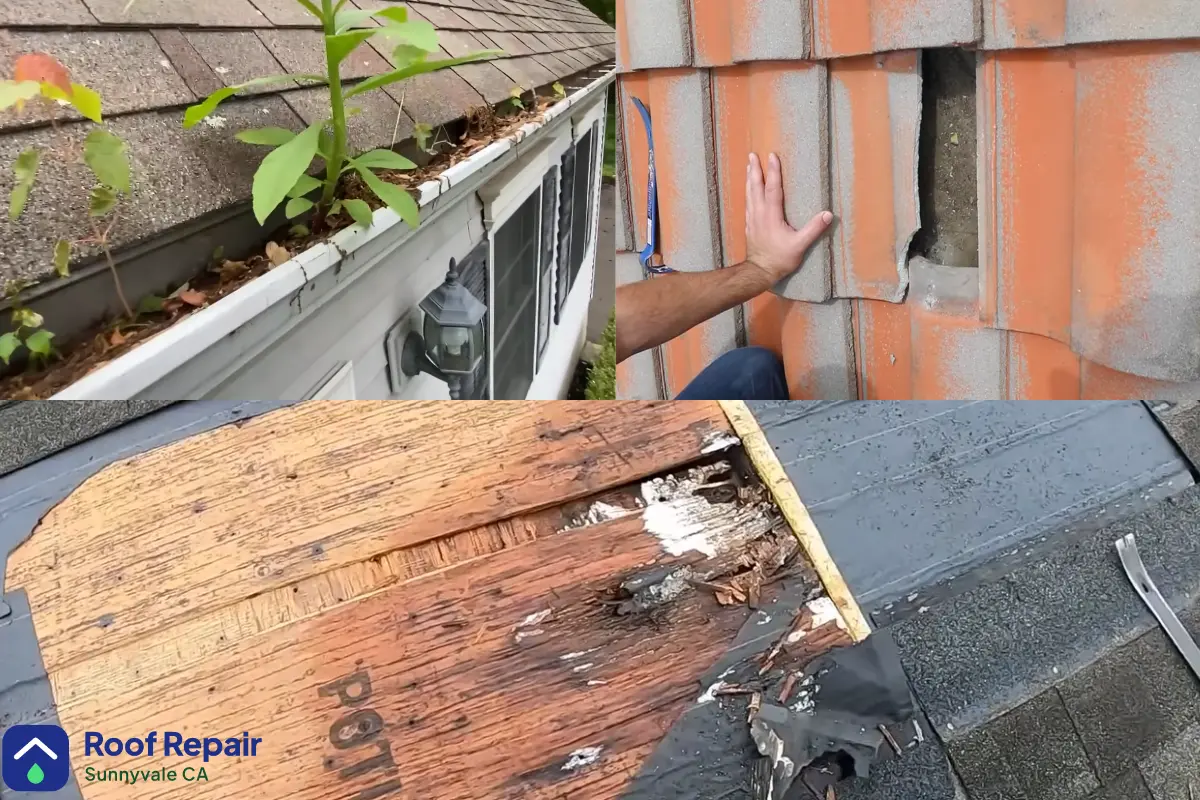
Why autumn is the right time to check your roof
Sunnyvale roofs spend the long dry months in sun and heat. Sealants dry out, rubber vent collars crack, and shingles lose some of their protective surface. None of that causes trouble until the rain returns, and then the weak spots show up as drips.
Most of the area's rain falls between late fall and early spring, though the first storm arrives at a different time every year. Finishing your checks early in autumn is safer than waiting for a forecast.
Repairs are also simpler in dry weather. Materials bond better, crews can work safely, and a small fix is easier than repairing wood and insulation that has been soaked. For the background, see how roof leaks start and get fixed.
Safety first: what you should and shouldn't do
You can do most of this checklist from the ground, from a stable ladder at the gutter line, and from inside the attic. You don't need to walk on the roof.
- Use binoculars or a phone zoom for anything high up.
- Use a ladder only if it is tall enough, sits on level ground and someone is with you. Otherwise hire someone for the gutters.
- Stay clear of power lines near the roof edge.
- Don't pressure-wash the roof. It strips granules and can force water under the roofing.
Leave roof access to a professional
Wet, steep and even dry roofs are slippery, and tiles break under body weight. If a check needs you on the roof, call a roofer instead.
The autumn roof checklist
Keep this page open on your phone or print it. Work through the six groups below and tick off each item.
1. From the ground (about 10 minutes)
- Walk all the way around the house and look up with binoculars or a phone zoom.
- Look for missing, cracked, curled or lifted roofing. What damaged shingles look like shows the common signs.
- Check ridge and hip caps for gaps or loose pieces.
- Look for dark, bare or shiny patches where the surface has worn away.
- Look along the roofline for dips or waves.
- Note any branches touching or hanging over the roof.
2. Gutters, downspouts and fascia
- Clear leaves and debris from gutters and downspouts.
- Run water through them to confirm they drain and carry water away from the foundation.
- Look for a lot of shingle granules in the gutters, which is a sign of surface wear.
- Check that the fascia boards along the roof edge are solid, not soft or dark.
3. Chimneys, vents, skylights and wall joints
- Look for rust streaks, gaps or cracked caulk around the chimney and where the roof meets a wall.
- Check the rubber collars around plumbing vents for cracks.
- Look at skylight edges for staining or gaps.
- Note any solar or satellite mounts that look loose.
The metal that seals these joints is called flashing. If anything looks wrong, read about how flashing fails around chimneys and walls.
4. In the attic (only if you can reach it safely)
- Use a flashlight to look at the underside of the roof for water stains, dark streaks or damp insulation.
- Look for daylight showing through the roof boards.
- Notice any musty smell.
- Make sure insulation isn't blocking the soffit vents.
5. Flat or low-slope roofs
- Clear leaves from drains and scuppers.
- Look from a safe vantage point for seams that have opened or edges that have lifted.
- After the first rain, check whether water is still standing a day or two later.
6. Write it down
- Take dated photos of anything that worries you.
- Keep a short list of what you found and where.
- Compare after the first big storm to see whether anything has changed.
Rather have a professional look?
Call us any time, day or night, or request a quote online. Tell us what you found and we will help you decide what needs attention before the rain.
What to check on each type of roof
| Roof type | What to look at | Read more |
|---|---|---|
| Asphalt shingle | Missing, curled or cracked shingles, bare patches, granules in the gutters, raised nails | See the shingle checks in group 1 above |
| Tile | Cracked or slipped tiles, crumbling mortar on the ridge, debris in valleys. Never walk on tile. | Tile roof care before winter |
| Flat or low-slope | Clogged drains, standing water, open seams, lifted edges | Flat roof drains and seams |
| Metal | Loose or backed-out fasteners, open seams, rust | Metal roof fasteners and seams |
What to fix now, and what can wait
| What you find | What to do | When |
|---|---|---|
| Missing, cracked or lifted shingles or tiles | Have them repaired | Before the rain |
| Rusted or gapped flashing, or a cracked vent collar | Have it resealed or replaced | Before the rain |
| Leaves and debris in gutters | Clear them | Before the first storm |
| Stains or damp wood in the attic | Have the source found, even if it is dry now | Now |
| Widespread curling, bare patches or heavy granule loss | Ask for an inspection and a repair-or-replace opinion | This autumn |
| Standing water on a flat roof after rain | Have drainage checked | After the first rain |
If you are unsure whether a repair will be enough, see when a repair stops being enough.
Before a big storm
- Re-check the gutters and downspouts the day before heavy rain.
- Move or secure loose items that wind could throw onto the roof.
- Keep towels, buckets and plastic sheeting where you can reach them.
- Take photos of the roof and ceilings so you have a record of how they looked.
- Save our number in your phone: (669) 240-7171.
If water does come in, follow what to do if water comes in during a storm.
When to call a roofer
Call if you find any of these:
- Stains, drips or peeling paint inside the house.
- Missing or damaged roofing, or damaged flashing.
- A repair that has failed before.
- A roof that has never been inspected and is getting older.
- Damage after strong wind, a big storm or an earthquake.
What do small fixes cost?
Small repairs made in dry weather are usually simpler than repairs after water has soaked the wood and insulation underneath. Our typical price ranges for roof repairs show what small, standard and major repairs usually cost. Your exact price comes after an inspection.
Questions about rainy season roof care
When does the rainy season start in Sunnyvale?
Most of the area's rain falls between late fall and early spring, but the first storm arrives at a different time each year. That is why it is safer to finish your roof checks early in autumn than to wait for a forecast.
How often should I check my roof?
At least once a year, ideally in early autumn before the rain returns. Check again after strong wind, a major storm or an earthquake, and any time you see a new stain inside the house.
Can I check my roof myself?
You can do a lot from the ground and from the attic with binoculars and a flashlight. Don't walk on the roof. Roofs are slippery and steep, and tiles crack under body weight. Leave anything that needs roof access to a professional.
Is it a good idea to pressure-wash my roof?
No. A pressure washer can strip the protective granules off shingles, lift roofing and force water underneath it. If moss or heavy debris is a concern, ask a roofer about gentler cleaning.
Should I clean my gutters before or after the leaves fall?
After most of the leaves have dropped, and before the heavy rain starts. If your yard has a lot of trees, plan on a second cleaning partway through the season.
Want a pro to check your roof before the rain?
Call us any time, day or night, and tell us what you see.
(669) 240-7171 Call about a roof check