
Roof vent repair in Sunnyvale, CA
Cracked vent boot, a stain under the bathroom fan, or an attic that stays hot and musty? Here's how roof vents fail on Sunnyvale homes, how they're fixed, and what to check while you wait.
- Certified California roofing contractor
- Bonded and insured
- Open 24/7
- Serving Sunnyvale since 2015
Roof vent repair is fixing or replacing the vents that let your attic breathe and carry bathroom, kitchen and dryer air outside. The usual failure in Sunnyvale is a rubber pipe boot cracked by years of sun, or a vent cover rusted or worked loose. We find the failed part, replace it, and check your attic ventilation while we're there.
Signs your roof vent needs repair
Vent problems show up indoors first: a stain, a smell, a sound. These are the ones worth acting on.
- A stain on a bathroom or kitchen ceiling. The exhaust vent or a plumbing vent pipe usually passes through the roof right above that room, and its seal is a common leak source.
- A drip or stain that appears only after rain, near a vent pipe or along the ridge.
- An attic that stays hot or smells musty, or mold spots on the attic wood. Those point to ventilation that isn't moving air.
- A turbine vent that squeaks, rattles or has stopped spinning. The bearings are worn, and a stalled vent moves far less air.
- A cracked rubber collar or a rusted, dented vent cover that you can spot from the ground.
- Birds, wasps or debris at a vent opening, or a missing screen. Open vents invite animals into the attic.
- A bathroom that stays steamy, with peeling paint. The fan's exhaust cap may be stuck shut, or the duct may not reach the roof at all.
A stain under a vent doesn't always mean the vent is the source, because water travels along the framing before it drips. If the mark grows after rain, treat it as an active leak. The tracing steps are the same ones in our guide to how a leak gets traced to its source.
The vents on a Sunnyvale roof, and how each one fails
Most homes have several kinds of vents, and each fails in its own way. This is what we look at first.
| Vent | What it does | How it fails | Typical fix |
|---|---|---|---|
| Plumbing vent pipes | Carry sewer gas out through the roof. A rubber boot seals the pipe where it exits. | The boot cracks and splits in the sun, usually years before the roof wears out. | Replace the boot or the pipe flashing. |
| Ridge vents | Let hot attic air out along the roof peak. | Sections lift in wind, crack, or clog with debris. | Reseat or replace the damaged section and clear it. |
| Box vents (static vents) | Exhaust attic air with no moving parts. | The metal rusts through, or the cap dents and cracks. | Replace the vent. |
| Turbine vents (whirlybirds) | Spin in the wind to pull hot air out of the attic. | Bearings wear out, so the turbine squeaks, wobbles or stalls. | Replace the turbine head or the whole unit. |
| Exhaust caps (bathroom, kitchen, dryer) | Vent household moisture and cooking air outside. | The flap sticks open or shut, the screen clogs, or the cap rusts. A stuck-open flap also lets rain and animals in. | Clean, repair or replace the cap. |
| Gable vents | Move air through the attic from the wall ends. | Screens tear and louvers crack, which lets animals in. | Rescreen or replace the vent. |
| Soffit intake vents | Let fresh air into the attic at the eaves. Exhaust vents can't work without them. | Insulation or paint blocks them, often right after attic work. | Clear or reopen the vents. |
| Attic fans (powered or solar) | Pull hot air out of the attic with a motor. | The motor, thermostat or humidistat fails, and the fan stops or runs nonstop. | Repair or replace the unit. |
Most vent repairs are one-part jobs. The part has to match the pipe size, the vent type and the roof, which is why the inspection comes before the fix.
Why roof vents fail
- Sun. Years of UV and heat cycles crack rubber boots and plastic caps. Sunnyvale's long dry summers age vents quietly, and the failure shows up in the first heavy rain.
- Rust. Galvanized vent bodies and caps corrode with age, starting where water sits.
- Wind. Ridge vent sections and caps work loose, and fasteners back out over time.
- Debris and animals. Leaves clog turbines and intake vents. Birds and wasps nest in open caps, and a torn screen is an open door to the attic.
- Poor original installation. A boot sized wrong for the pipe, nails driven through the flashing flange, or sealant used where the parts should overlap. Some of these are really failures of the metal flashing at the base of each vent, and they're fixed as flashing, not as vents.
How we repair a roof vent
- Questions first. Which room is below the problem, when does it drip or overheat, and how old is the roof? The answers point to the right vent.
- Attic check. We look above the vent for water trails, damp insulation, mold and blocked intake vents.
- Roof check. The boot, cap, flashing and the roofing around the vent get inspected up close.
- Remove what failed, such as a split boot, a rusted vent body or a dead turbine.
- Fit the replacement, sized to the pipe or vent opening and matched to the roof type, integrated with the underlayment and the roof surface so water sheds over it, not under it.
- Seal and test. Fasteners are covered and sealed, exhaust flaps and fans are tested, and intake vents are confirmed clear.
- Balance check. We confirm the attic has enough intake air for its exhaust vents, and tell you if the system is unbalanced.
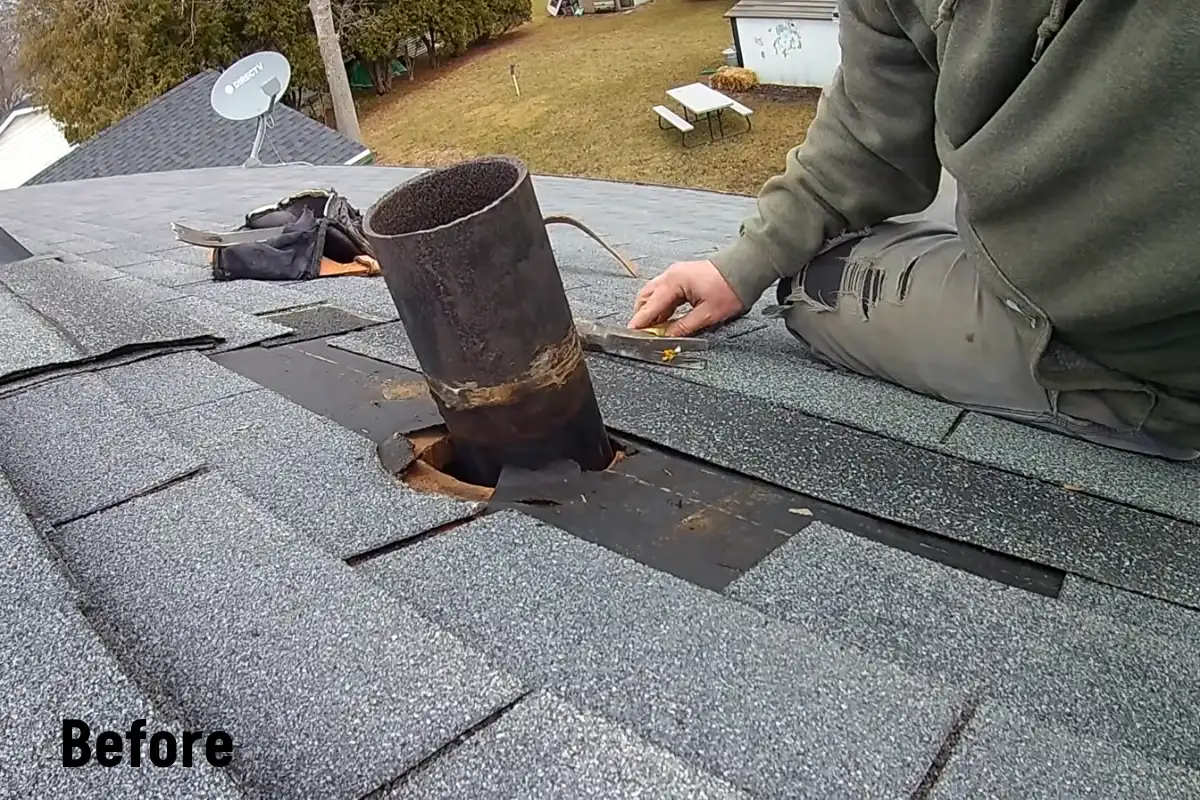
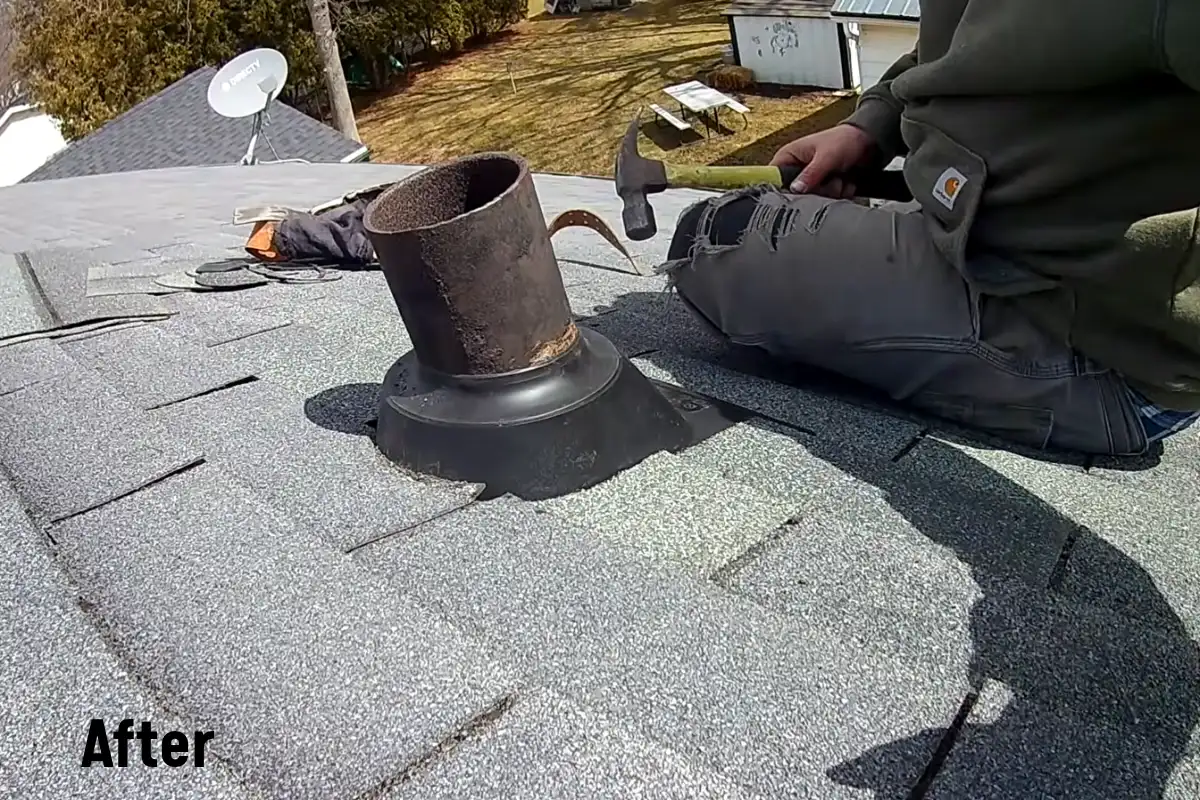
Attic ventilation: the other half of vent repair
Ventilation works as a system. Cool air comes in at the eaves through the soffit vents, and hot air leaves at the top through ridge, box or turbine vents. Building codes size the vent area to the attic, and the system only works when intake and exhaust are in balance. A single failed vent can upset that balance, and so can a repair that adds exhaust without intake.
Poor ventilation is hard on the house and the roof. Heat trapped in the attic ages the roof surface early, one of the patterns behind shingles that have aged early from attic heat. Moisture from showers and cooking that can't escape condenses on the attic wood, and wood that stays damp can grow mold and rot.
Two causes show up again and again in Sunnyvale homes. The first is soffit intake vents blocked by insulation, often after attic work, so the exhaust vents have nothing to draw. The second is a bathroom fan that ducts into the attic instead of out through a roof cap, dumping moist air where it does the most harm. Both are fixable: clear the intake, correct the duct termination, and repair or replace the exhaust vents. If your attic needs vents added, that's a design change, and we'll show you the math before recommending it.
Repair or replace the vent?
- Replace just the boot when the pipe flashing is otherwise sound and the roofing around it is healthy. This is the most common vent fix.
- Replace the whole vent when the body is rusted through, cracked or dented, or when a turbine or fan has failed.
- Reseat and reseal only when the part itself is sound and the problem is a loose fastener or failed sealant. Sealant smeared over a cracked boot is a patch, not a repair, and it won't last.
- Check the other vents too. Vents installed together age together. If one boot has cracked, the rest are usually not far behind, and replacing them in the same visit costs less than separate trips.
Vents on shingle, tile and flat roofs
Shingle roofs
Vent flashing is nailed and lapped under the shingles above it and over the shingles below, so water runs past. Repairs replace the damaged shingles around the vent along with the vent itself.
Tile roofs
Vents on tile need flashing pans shaped for the tile profile, and tiles around the vent often have to come up and go back down. Cracked tiles at a vent base are part of the repair, not an extra surprise.
Flat and low-slope roofs
On flat roofs, vents and pipes sit on curbs or pitch pans sealed into the membrane. Water ponds longer around them, so the seal gets checked closely and renewed with materials that suit the membrane.
How much does roof vent repair cost in Sunnyvale?
Here is what roof vent repair typically costs in Sunnyvale. These are ranges, not quotes. Your exact price comes after an inspection.
| Repair size | What it usually covers | Typical range |
|---|---|---|
| Small | One cracked pipe boot or a failed exhaust cap, replaced. | $300 to $550 |
| Medium | A box vent, turbine or ridge vent section replaced, or several boots replaced in one visit. | $450 to $850 |
| Large | An attic fan replacement, several vents at once, or vent work where wet decking or insulation also needs repair. | $850 to $1,500 |
Ranges are for vent repairs only, not a full roof replacement.
These are the factors that move the price:
- The part. A rubber boot costs less than a turbine unit, an attic fan or a tile-profile vent pan.
- How many vents. Replacing several aged boots in one visit costs less per vent than separate trips.
- Roof type, pitch and access. Tile work and steep roofs take more time and care.
- Hidden damage. Wet decking, damp insulation or mold under the vent adds work.
- Interior repairs. Ceiling drywall and paint are usually separate from the roof work.
Ask for a written, itemized estimate that separates the vent work, any wood replacement and the interior work.
What to do while you wait for help
- If a vent is leaking, put a bucket under the drip and move belongings away from the wet area.
- Take photos, and mark the edge of any stain in pencil with the date.
- Stay clear of wet ceiling light fixtures and fan units. If water is near wiring, turn off power to that room.
- Stay off the roof, especially when it's wet.
- If water is coming in faster than a bucket handles, ask about emergency tarping to hold the roof until the vent is replaced.
Pro tip
Note when the drip happens. A stain that grows only in rain points to the roof. A bathroom ceiling that drips after long showers, even in dry weather, points to the fan duct or its vent cap. That one detail speeds up the diagnosis.
Don't just seal it
Smearing sealant over a cracked boot or a rusted vent hides the symptom while water keeps getting in. Replace the failed part.
Questions about this repair
Why is there a water stain on my bathroom ceiling?
The exhaust vent cap or a plumbing vent pipe usually passes through the roof right above the bathroom, and a cracked boot or rusted cap lets rain in at that spot. A stain that appears after showers instead of rain can mean the fan duct ends in the attic rather than at a roof cap. An attic check confirms which one it is.
How long does a rubber vent boot last?
Often 10 to 15 years in the sun before the rubber cracks, which is usually sooner than the roof itself wears out. That makes boot replacement routine maintenance rather than a sign of a bad roof. If your roof is past its first decade and a boot has never been replaced, it's worth having them all checked.
Can a roof vent be repaired, or does it have to be replaced?
A sound vent with a loose fastener or failed sealant can be reseated and resealed. A cracked boot, a rusted-through vent body or a dead turbine needs the part replaced. Sealant alone on a cracked boot is a short-term patch, not a repair.
Why is my attic so hot and musty?
Usually the intake and exhaust are out of balance: soffit vents blocked by insulation, too little exhaust at the top, or a bathroom fan dumping moist air into the attic. Heat builds up, moisture condenses on the wood, and the musty smell follows. The fix is to restore the airflow path, not just add a bigger fan.
My turbine vent squeaks or stopped spinning. Is that a problem?
Yes. The bearings are worn, and a stalled turbine moves far less air than a spinning one, so the attic overheats and moisture lingers. A damaged turbine can also let wind-driven rain in. Replacing the turbine head is the usual fix.
Can I replace a vent boot myself?
Roof work is risky, and a wet or steep roof is especially dangerous. The indoor steps are safe and useful: buckets, photos, notes on when the drip happens. Leave the roof itself, and the flashing work around the vent, to a professional with the right safety equipment.
Vent problem? Call and describe it.
Tell us which room is below the stain, or what the vent is doing. That's enough to get started.
(669) 240-7171 Call about a roof vent